Do You Know Your Hair’s Porosity? A Complete Guide
Discover low, medium, and high hair porosity, how to identify your type, and how to choose suitable hair care products and salon treatments.
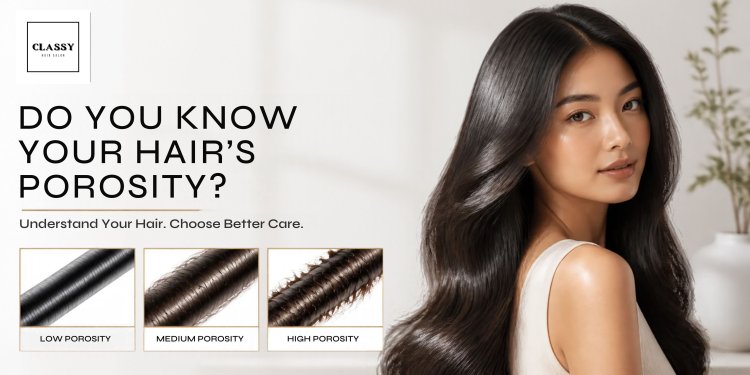
Have you ever wondered why your hair feels dry even after conditioning, or why certain products make your hair look heavy and greasy? The answer may have something to do with your hair’s porosity!
Hair porosity is an important part of understanding your hair care needs. It affects how your hair absorbs moisture, retains hydration, and responds to conditioners, styling products, and professional treatments. Once you understand your hair’s porosity, choosing the right products and building a suitable routine can become much easier.
At Classy Hair Salon, we believe that beautiful, manageable hair starts with understanding its individual needs. Whether your hair is straight, wavy, curly, color-treated, or chemically processed, learning about porosity can help you make more informed hair care decisions.
Let’s explore the three main types of hair porosity, how to identify yours, and how to care for your hair more effectively.
What Is Hair Porosity?
Hair porosity refers to your hair’s ability to absorb and retain moisture. It is influenced by the structure and condition of the hair cuticle, the outermost protective layer of each strand.
When the cuticle is tightly packed, moisture may take longer to enter the hair. When the cuticle is more raised or damaged, moisture may enter easily but can also escape more quickly.
Hair porosity is generally divided into three categories:
-
Low porosity: Hair tends to resist moisture absorption.
-
Medium porosity: Hair generally absorbs and retains moisture relatively well.
-
High porosity: Hair tends to absorb moisture quickly but may struggle to retain it.
Your natural hair structure plays a role in porosity, but bleaching, coloring, chemical straightening, excessive heat, and environmental exposure can also affect the hair’s condition.
3 Types of Hair Porosity and How to Identify Them
1. Low Porosity Hair: When Moisture Takes Longer to Absorb
Low-porosity hair has a cuticle structure that makes it more difficult for water and some products to penetrate the hair shaft.
Common signs of low-porosity hair include:
-
Hair takes longer to become fully wet.
-
Products sometimes sit on the surface of the hair.
-
Heavy conditioners and oils can make hair feel greasy or weighed down.
-
Product buildup may become noticeable.
-
Hair may take a long time to dry, although drying time also depends on thickness and density.
How should you care for low-porosity hair?
Choose lightweight conditioners and styling products that do not leave your hair feeling coated. Cleanse regularly according to your scalp’s needs, and avoid layering too many products at once.
Warm water during washing can help with product distribution, but avoid excessive heat in an attempt to force moisture into your hair. A simple, consistent routine is often more useful than using numerous treatments.
2. Medium Porosity Hair: A Balanced Moisture Routine
Medium-porosity hair generally absorbs moisture without too much difficulty and retains it reasonably well. This balance can make everyday styling and maintenance easier.
You may notice that your hair:
-
Responds well to regular conditioning.
-
Holds hairstyles reasonably well.
-
Feels manageable when using suitable products.
-
Does not consistently struggle with moisture absorption or retention.
However, medium porosity does not mean your hair is immune to damage. Frequent heat styling, chemical processing, and rough handling can still affect its condition.
How should you care for medium-porosity hair?
Maintain a balanced routine with a suitable shampoo, conditioner, and occasional deep-conditioning treatment when needed. Use heat protectant before styling and avoid unnecessary chemical processing.
If you color your hair or regularly use hot tools, pay attention to changes in texture. Your hair’s porosity and condition can change over time, so adjust your routine when necessary.
3. High Porosity Hair: When Hair Struggles to Retain Moisture
High-porosity hair absorbs water relatively quickly but may lose moisture more easily. This can be a natural characteristic or a result of damage to the hair cuticle.
Bleaching, frequent coloring, excessive heat, and chemical treatments can contribute to increased porosity.
Common signs of high-porosity hair include:
-
Hair feels dry soon after washing.
-
Frizz becomes more noticeable, particularly in humid weather.
-
Strands tangle easily.
-
Hair feels rough or looks dull.
-
Breakage and split ends become more frequent.
How should you care for high-porosity hair?
Focus on conditioning, gentle handling, and reducing additional damage. A suitable leave-in conditioner or richer conditioning product may help your hair feel softer and more manageable.
Avoid excessive heat and brush gently to minimize friction. If your hair is chemically treated or breaking frequently, consult a stylist before scheduling another chemical service.
Remember, high porosity does not automatically mean damaged hair. Your hair’s overall condition, texture, and treatment history also matter.
How Can You Test Your Hair Porosity at Home?
One popular method is the glass-of-water test. Although widely discussed in hair care, it is not a reliable scientific way to determine porosity on its own.
If you want to understand your hair better, observe how it behaves during your regular routine instead.
Look at How Your Hair Responds to Water
Notice whether your hair becomes wet easily or seems to resist water at first. Keep in mind that oils, styling products, and buildup can influence this.
Pay Attention to Conditioning Products
Does your hair feel soft and manageable after conditioning, or does it remain dry or become weighed down? These observations can help you determine whether your current products suit your hair.
Observe Drying Time and Frizz
Hair that dries quickly may have higher porosity, but strand thickness, density, length, and the surrounding environment also influence drying time. Frizz can have several causes, so do not use it as the only indicator.
For a more complete picture, consider your hair’s texture, chemical history, and overall condition together.
How Hair Porosity Affects Salon Treatments
Understanding porosity can be especially helpful when choosing professional hair services. Hair that absorbs and loses moisture differently may respond differently to chemical processing and conditioning products.
For example, someone researching Japanese hair straightening Gardena CA should discuss their hair’s current condition and previous treatments with a stylist before proceeding. Japanese straightening is a chemical process that permanently changes the structure of treated hair, so severely compromised strands may not be suitable candidates.
If you are considering Yuko hair straightening Gardena, your consultation should include a review of previous coloring, bleaching, and straightening services.
For those who mainly want to reduce frizz, a Keratin treatment Gardena CA may be worth discussing. Keratin treatments and Japanese straightening are different services, and neither should be selected based on porosity alone.
Classy Hair offers several professional options, including Yuko straightening, Cosme straightening, Acid straightening, and keratin treatments. You can also read the salon’s guide to Japanese hair straightening and aftercare before deciding which service to explore.
If you are looking for a Japanese hair salon Gardena CA, a personalized consultation can help you understand which treatments fit your goals and hair condition.
Other services may also be relevant depending on your needs. Clients considering Acid hair straightening Gardena CA or Cosme hair straightening Gardena should discuss their hair history and desired finish with a professional stylist.
Similarly, Hair color and highlights Gardena CA services require careful consideration of existing damage, especially if your hair has already been bleached or chemically treated.
If you are searching for a Head spa Gardena CA service, remember that a head spa focuses on scalp care and relaxation. It may support scalp cleanliness and comfort, but it does not change hair porosity or repair structural damage to the hair shaft.
Whether you need a Hair salon near Western Avenue Gardena or are exploring Japanese hair straightening near Torrance CA, choosing a service based on your hair’s actual condition is an important first step.
For additional guidance, explore Classy Hair’s professional services and its article on Japanese straightening versus keratin treatments.
Frequently Asked Questions About Hair Porosity
1. Can hair porosity change over time?
Yes. Your natural hair structure influences porosity, but bleaching, coloring, chemical straightening, and excessive heat can affect the cuticle and change how your hair absorbs and retains moisture.
2. Which hair porosity type is the healthiest?
No porosity type is automatically healthier than another. Hair condition depends on factors such as breakage, elasticity, chemical history, and how well your routine meets your hair’s needs.
3. Is high-porosity hair always damaged?
No. Some people naturally have high-porosity hair. However, damage from chemical processing or excessive heat can also increase porosity and make hair more fragile.
4. What products work best for low-porosity hair?
Lightweight conditioners and styling products are often a useful starting point. Avoid excessive product layering, and cleanse as needed to prevent buildup.
5. Can I get Japanese hair straightening if I have high-porosity hair?
It depends on your hair’s strength and treatment history. High porosity alone does not determine suitability, but severely damaged or fragile hair may be at greater risk of breakage during chemical processing. Ask a qualified stylist to assess your hair before proceeding.
Final Thoughts: Give Your Hair What It Needs
Understanding hair porosity can help you make smarter decisions about conditioning, styling, and professional treatments. Instead of choosing products simply because they work for someone else, pay attention to how your own hair absorbs moisture, retains softness, and responds to your routine.
Low-, medium-, and high-porosity hair can all look beautiful with appropriate care. The key is to keep your routine simple, avoid unnecessary damage, and adjust your products as your hair’s needs change.
If you are unsure where to start, professional guidance can help you better understand your hair’s condition and explore suitable options.
Ready to learn more about your hair care options? Visit Classy Hair Salon in Gardena, California, to discuss your hair goals with a professional stylist.
Contact Classy Hair Salon
Classy Hair Salon
16008 S Western Ave #B, Gardena, CA 90247
Phone: 310-538-9928
Website: https://classy-hair.com/
Explore our services or contact the salon to learn more.
What's Your Reaction?