7 Everyday Hair Habits That Cause Damage (and Easy Swaps)
Discover 7 everyday habits that can cause hair damage, from rough towel-drying and over-brushing to tight hairstyles and heat styling. Learn simple hair care tips to protect your hair between salon visits.
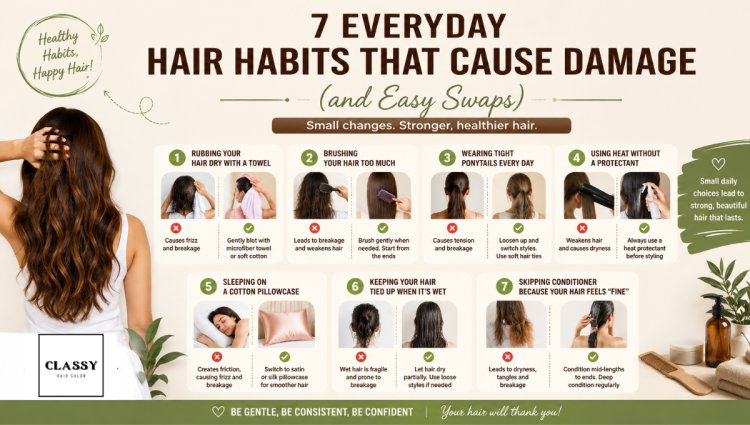
We all want hair that looks smooth, shiny, and healthy, but sometimes the little things we do every day can work against us. You may have a great shampoo, visit the salon regularly, and use quality styling products, yet still notice split ends, frizz, breakage, or hair that feels unusually dry.
The surprising part? Some of the habits causing hair damage may seem completely harmless.
The way you dry your hair, brush it, tie it up, or even sleep can affect its condition over time. The good news is that you don't need to completely change your routine. A few simple swaps can make a noticeable difference.
At Classy Hair, we believe healthy-looking hair starts with the small things you do between salon visits. Here are seven everyday habits worth reconsidering—and what you can do instead.
1. Rubbing Your Hair Dry With a Towel
Stepping out of the shower and vigorously rubbing your hair with a towel feels natural. It's quick, easy, and gets rid of excess water.
Unfortunately, wet hair is more delicate than dry hair. Rough towel-drying can create friction, contribute to frizz, and increase the chance of breakage, especially if your hair is already dry or chemically treated.
Try this instead:
Gently squeeze excess water from your hair with your hands. Then wrap it in a soft microfiber towel or a clean cotton T-shirt and gently press or blot the hair.
You don't need to scrub it dry. Let the towel absorb the moisture rather than using friction to remove it.
It's a small change, but it can help reduce unnecessary hair breakage over time.
2. Brushing Your Hair Too Much
We've all heard that brushing your hair 100 times a day is good for it. In reality, more brushing doesn't automatically mean healthier hair.
Repeated brushing, especially when you're pulling through knots, can cause unnecessary tension and breakage. This can be even more noticeable with long, fine, bleached, or fragile hair.
Try this instead:
Brush when you actually need to—not simply because you've reached a certain number of strokes.
Start at the ends and gently work your way upward. If your hair is tangled, don't force the brush through it. Use a wide-tooth comb or a detangling brush and take your time.
If your hair is very wet, be extra gentle. A little patience here can save you from a lot of broken strands later.
3. Wearing Tight Ponytails Every Day
A sleek ponytail can look effortlessly polished, but wearing your hair pulled tightly into the same style every day can put repeated tension on the roots and hair shaft.
You might notice this around your hairline, where shorter broken hairs start appearing. Constant tension isn't ideal for your scalp or your hair.
Try this instead:
Loosen your ponytail slightly and switch up where you place it. One day, wear it low; another day, try a loose braid or a relaxed claw-clip style.
Soft fabric-covered hair ties can also be gentler than tight elastic bands.
The goal isn't to stop wearing ponytails altogether. It's simply to avoid putting the same amount of tension on the same areas every day.
4. Using Heat Without a Protectant
Hair dryers, straighteners, and curling irons are incredibly useful when you're trying to create a particular look. The problem starts when high heat becomes part of your routine without any protection.
Frequent heat styling can leave hair feeling dry, rough, and more prone to split ends.
One of the easiest ways to improve your routine is to use a heat protectant before applying hot tools.
Try this instead:
Apply a suitable heat-protecting product before blow-drying, straightening, or curling. Make sure your hair is prepared according to the product instructions, and avoid repeatedly passing a hot tool over the same section.
Whenever possible, use the lowest temperature that still gives you the result you want.
And remember: more heat doesn't necessarily mean better styling.
5. Sleeping on a Cotton Pillowcase
Your pillowcase may not be the first thing you think about when considering hair care, but it can make a difference.
Traditional cotton pillowcases can create friction as you move around during the night. For some people, that can contribute to morning frizz, tangling, and breakage.
Try this instead:
Consider switching to a satin or silk pillowcase. The smoother surface allows your hair to move more easily while you sleep.
You can also loosely braid longer hair before bed to help prevent tangles. Just avoid making the braid too tight.
This is one of those easy hair care tips that requires almost no extra effort once you've made the switch.
6. Keeping Your Hair Tied Up When It's Wet
Wet hair is more fragile, so pulling it into a tight bun or ponytail straight after washing isn't the best idea.
When wet strands are stretched and held in place, they can be more vulnerable to breakage. A tight hairstyle can also leave your hair feeling pulled and uncomfortable.
Try this instead:
Give your hair some time to dry before tying it up. If you need to keep it out of your face, use a loose, gentle style rather than pulling it tightly.
If you regularly wash your hair before work or heading out, plan a little extra drying time into your routine.
Your hair doesn't need to be perfectly dry before you style it, but avoiding tight hairstyles while it's soaking wet is a helpful habit.
7. Skipping Conditioner Because Your Hair Feels "Fine"
Some people skip conditioner because they worry it will make their hair greasy, flat, or heavy. But conditioner plays an important role in helping hair feel smoother and easier to manage.
When hair lacks moisture, it may become harder to detangle, which can lead to more pulling and hair breakage during brushing.
Try this instead:
Apply conditioner mainly through the mid-lengths and ends, particularly if your roots tend to become oily.
You don't necessarily need a large amount. Start with a small amount and adjust according to your hair type and length.
For dry or damaged hair, an occasional deep-conditioning treatment can also be a useful addition to your hair care routine.
Small Changes Can Make a Big Difference
Protecting your hair doesn't have to mean buying an entire shelf of products or completely changing your routine.
Sometimes, it's as simple as being gentler.
Blot your hair instead of aggressively rubbing it. Brush out tangles patiently. Give your ponytail a little more room. Use heat protectant before styling. Consider a smoother pillowcase. Avoid pulling wet hair into tight hairstyles, and don't underestimate the value of conditioner.
These habits may seem minor on their own, but repeated every day, they can have an impact on the way your hair looks and feels.
At Classy Hair, we know that beautiful hair isn't only about what happens during a salon appointment. It's also about the care you give your hair at home.
So the next time your hair feels dry, frizzy, or more fragile than usual, take a look at your everyday habits before changing everything else. Sometimes, the easiest solution is simply doing a familiar thing a little differently.
Frequently Asked Questions
1. What causes the most common hair damage?
Everyday hair damage can come from several habits, including excessive heat styling, rough towel-drying, aggressive brushing, tight hairstyles, and chemical treatments. How often you do these things and your individual hair type also matter.
2. Is brushing your hair every day bad?
Not necessarily. Gentle daily brushing can help keep hair manageable, but aggressive or excessive brushing can contribute to breakage. Always detangle gently, starting from the ends and working upward.
3. Should I use heat protectant every time I use a hair dryer?
Using a heat protectant is a good precaution whenever you're applying heat to your hair. Follow the product's instructions and avoid using unnecessarily high temperatures.
4. Is satin better than cotton for your hair?
A satin or silk pillowcase generally creates less friction than traditional cotton, which may help reduce tangling and frizz while you sleep. It can be particularly useful for long, curly, dry, or fragile hair.
5. How can I protect my hair between salon visits?
Focus on gentle hair care habits: avoid excessive heat, use heat protection, condition your lengths and ends, detangle carefully, avoid very tight hairstyles, and handle wet hair gently. Small changes made consistently can help your hair stay looking healthier between appointments.
https://classy-hair.com/
CALL. 310-538-9928
What's Your Reaction?