Hair Porosity Explained: How to Know What Your Hair Really Needs
Learn what hair porosity means, how to identify low, medium, and high porosity hair, and choose the right products and routine for healthier-looking hair.
Hair care is not a one-size-fits-all process. The products that work beautifully for one person may leave someone else’s hair feeling dry, heavy, or difficult to manage. One important factor behind these differences is hair porosity.
Hair porosity refers to your hair’s ability to absorb and retain moisture. Understanding your hair porosity can help you choose suitable products, improve your hair care routine, and avoid common mistakes that may leave your hair looking dull or weighed down.
Whether your hair is straight, wavy, curly, or coily, knowing its porosity can give you a better understanding of what it needs.
What Is Hair Porosity?
Hair porosity describes how easily moisture and hair products can enter and remain inside the hair shaft. It is largely influenced by the condition and structure of the hair cuticle, which is the outermost layer of each strand.
Hair is generally classified into three porosity levels:
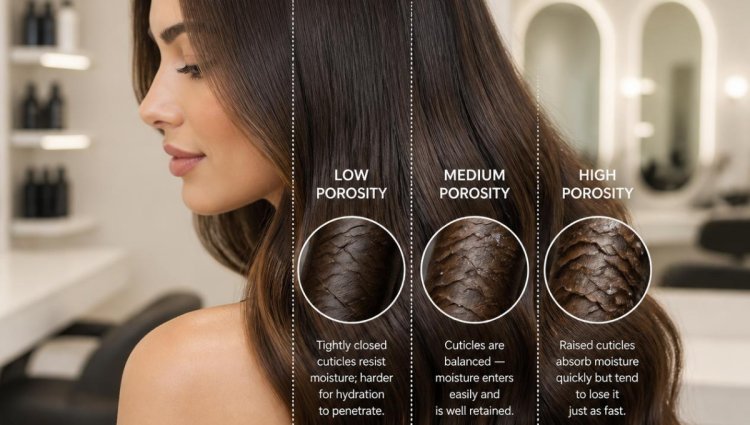
- Low porosity: Hair cuticles are tightly packed, making it harder for moisture to enter.
- Medium porosity: Hair absorbs and retains moisture relatively easily.
- High porosity: Hair cuticles are more open or raised, allowing moisture to enter quickly but potentially escape just as easily.
Your natural hair structure, chemical treatments, heat styling, environmental exposure, and overall hair condition can all influence porosity.
Why Does Hair Porosity Matter?
Understanding your hair porosity can help you make more informed decisions about products and styling techniques.
For example, low-porosity hair may become weighed down when too many heavy products are applied. High-porosity hair, on the other hand, may need more conditioning and moisture retention because it can lose hydration quickly.
Instead of continuously changing products without knowing what your hair needs, identifying your porosity can help you build a more targeted routine.
Low Porosity Hair: What Does It Need?
Low-porosity hair has tightly closed cuticles. Because of this structure, water and products may take longer to penetrate the hair.
Some common characteristics include:
- Products tend to sit on the hair rather than absorb quickly.
- Hair can feel weighed down by heavy oils or creams.
- It may take longer for hair to become completely wet.
- Product buildup can become noticeable over time.
- Lightweight conditioning products may work better.
For low-porosity hair, avoid automatically layering several rich products. A lightweight routine can often be more effective. Gentle cleansing can also help remove buildup so that conditioning products can work more effectively.
Warm water during washing may also help open the cuticle slightly, allowing conditioning products to distribute more easily.
Medium Porosity Hair: The Balanced Type
Medium-porosity hair generally has a good balance between absorbing and retaining moisture. The cuticle is neither extremely tight nor excessively open.
This type of hair often:
- Absorbs moisture relatively easily.
- Holds styles reasonably well.
- Is easier to manage with a consistent routine.
- Does not require excessive product layering.
- Can usually tolerate a wider variety of hair care products.
However, medium-porosity hair can still become dry or damaged through excessive heat styling, chemical processing, or environmental exposure.
The key is maintaining balance. Regular conditioning, gentle handling, and avoiding unnecessary product buildup can help keep medium-porosity hair looking healthy and manageable.
High Porosity Hair: Focus on Moisture Retention
High-porosity hair has a more open or raised cuticle structure. This can occur naturally, but it may also develop as a result of bleaching, coloring, frequent heat styling, chemical treatments, or other forms of damage.
High-porosity hair may:
- Absorb water very quickly.
- Dry out quickly after washing.
- Feel rough or dry.
- Experience increased frizz.
- Be more prone to breakage and tangling.
- Benefit from richer conditioning products.
The main goal for high-porosity hair is often moisture retention. Deep conditioning can be useful, while leave-in conditioners and products designed to help seal moisture may also support a smoother-feeling finish.
If your hair has significant damage from chemical processing or heat, professional advice can also help determine which treatments are appropriate.
How Can You Test Your Hair Porosity?
Several simple methods are commonly used to estimate hair porosity, although they are not perfect scientific tests.
One popular method is the water test. Take a clean strand of hair and place it gently in a glass of room-temperature water. If the strand remains floating for a long time, it may indicate lower porosity. If it gradually sinks, it may suggest medium or higher porosity.
However, this test should not be treated as a definitive diagnosis. Product buildup, oils, hair damage, and even the condition of the individual strand can affect the result.
Instead of relying on one test, pay attention to how your hair behaves during washing, conditioning, drying, and styling.
Signs Your Hair Care Routine May Not Match Your Porosity
Sometimes your hair can tell you that your routine needs adjustment.
If your hair frequently feels coated, greasy, or heavy even after washing, you may be using products that are too rich for your hair.
If your hair feels dry shortly after conditioning, becomes excessively frizzy, or seems unable to retain moisture, it may need a different approach.
Other signs to watch for include:
- Persistent product buildup
- Excessive dryness
- Frequent tangling
- Lack of softness
- Increased frizz
- Hair that feels unusually heavy
- Difficulty maintaining a hairstyle
These symptoms can have many causes, so porosity should be viewed as one factor rather than the only explanation.
How to Build a Hair Care Routine Based on Porosity
Once you have an idea of your hair’s porosity, consider adjusting your routine rather than completely changing everything at once.
For Low Porosity Hair
Choose lightweight conditioners and styling products. Avoid applying large amounts of heavy oils, creams, or multiple layers of products. Regular cleansing can also help manage buildup.
For Medium Porosity Hair
Focus on consistency. Use a suitable shampoo and conditioner, protect your hair from excessive heat, and adjust your routine according to seasonal changes and styling needs.
For High Porosity Hair
Prioritize conditioning and moisture retention. Deep conditioning may be beneficial, while leave-in products can help maintain softness. Minimize unnecessary heat and chemical processing when possible.
Hair Porosity Is Only One Part of Healthy Hair
Although hair porosity can provide useful guidance, it should not determine your entire hair care routine.
Your hair texture, density, scalp condition, lifestyle, styling habits, previous chemical treatments, and environmental exposure also matter.
For example, two people may both have high-porosity hair but need completely different routines because one has fine hair while the other has thick, coarse hair.
If you regularly color, straighten, smooth, or chemically treat your hair, your hair’s condition may also change over time. A professional hair consultation can help you understand these changes and choose appropriate care.
Final Thoughts
Understanding hair porosity can make your hair care routine more intentional. Instead of choosing products simply because they work for someone else, you can consider how your own hair absorbs and retains moisture.
Whether you have low-, medium-, or high-porosity hair, the goal is the same: maintain moisture balance, minimize unnecessary damage, and use products that suit your hair’s individual needs.
Remember that porosity is not a permanent label. Your hair’s condition can change with coloring, chemical treatments, heat styling, and environmental exposure. Pay attention to how your hair responds and adjust your routine accordingly.
For personalized advice, a professional hair consultation can help you understand your hair’s current condition and determine the most suitable care approach.
Frequently Asked Questions About Hair Porosity
1. What is the best way to determine hair porosity?
There are several at-home methods, including observing how quickly your hair absorbs water and how it responds to products. The commonly used water test can provide a general indication, but it is not completely reliable. Looking at your hair’s behavior over time and consulting a professional can provide a better understanding.
2. Can hair porosity change over time?
Yes. Hair porosity can change depending on the condition of your hair. Bleaching, coloring, chemical processing, excessive heat, and environmental exposure can affect the cuticle and potentially increase porosity.
3. Is high-porosity hair damaged hair?
Not necessarily. Some people naturally have higher-porosity hair. However, damaged hair often becomes more porous because processes such as bleaching and excessive heat can affect the hair cuticle.
4. What type of products are best for low-porosity hair?
Low-porosity hair often responds well to lightweight shampoos, conditioners, and styling products. Avoiding excessive product layering can help prevent buildup and keep the hair from feeling heavy.
5. How often should I deep condition high-porosity hair?
The ideal frequency depends on your hair’s condition, texture, and styling routine. High-porosity or chemically processed hair may benefit from regular deep conditioning, but using too many heavy products can also cause buildup. Start with a manageable routine and adjust based on how your hair responds.
www.classy-hair.com
310-538-9928
What's Your Reaction?